Pattaya City Expats Club hosts health-focused talks on nutrition and expat healthcare

PATTAYA, Thailand – At the Wednesday, January 14, 2026, meeting of the Pattaya City Expats Club (PCEC), there were two informative speakers, both with a message about health. Best-selling author Curtis Arnold delivered a compelling presentation titled “A New Way to View Nutrition – why 37 trillion cells need your help.” Drawing from personal experience and extensive research, Curtis challenged conventional wisdom about diet, chronic disease, and the modern food system. Tanya Wallapha, healthcare “wing-woman” for Expats in Pattaya delivered an insightful presentation, drawing on more than a decade of experience supporting foreigners in their medical and wellness needs.
Curtis began by sharing his own journey: at age 72, he was overweight and experiencing declining strength. Motivated by health concerns, he embarked on a rigorous self-education in nutrition, spending hours daily reading and experimenting with different diets. His transition from a ketogenic to a stricter carnivore diet, combined with targeted supplements like creatine, led to significant weight loss and a reversal of age-related muscle loss (sarcopenia). By age 75, Curtis reported being as strong as he was at 35, crediting his protocols for this transformation.
Curtis painted a stark picture of the current state of nutrition, particularly in the United States. He cited alarming statistics: 74% of adults are overweight or obese, 60% have a chronic disease, and 40% of children are obese. He argued that these issues are largely preventable and stem from the modern food environment, where 70% of calories come from ultra-processed foods engineered for addiction. Curtis emphasized that nutrient depletion in soil, aggressive food processing, and the prevalence of additives have left half the population deficient in essential micronutrients.
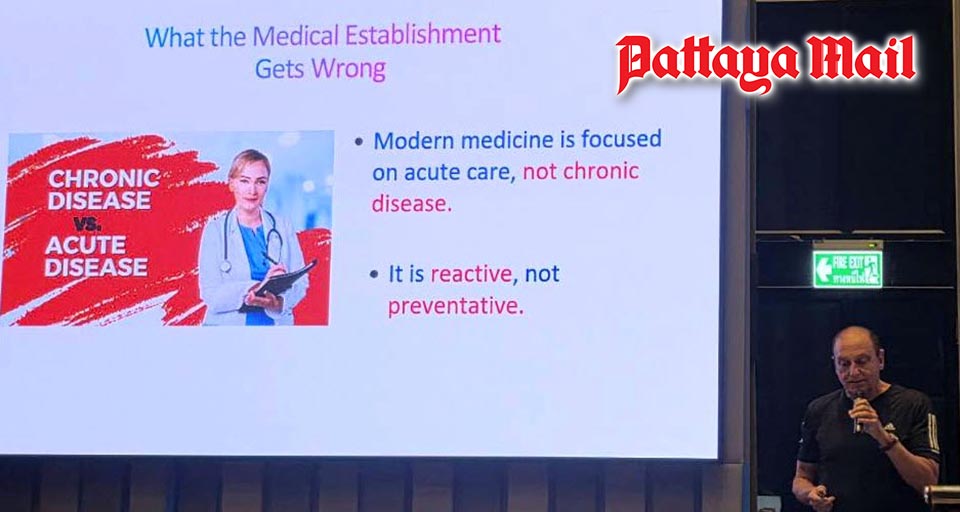
Curtis was critical of the medical establishment’s approach to chronic disease, noting that most doctors receive minimal training in nutrition. He asserted that medicine is reactive, designed to treat acute conditions rather than prevent chronic illnesses, which often develop silently over decades. “You have to take matters into your own hands if you want to be disease-free and have a great marginal decade,” he urged, referring to the last ten years of life.
A key part of Curtis’s talk was explaining how carbohydrates, fats, and proteins function in the body. He warned against simple carbohydrates, which spike blood sugar and insulin, leading to fat storage and insulin resistance—a precursor to diabetes, heart disease, and Alzheimer’s. Curtis advocated for complex carbohydrates, healthy fats (like those from avocados and wild fish), and a higher intake of protein, especially as people age. He recommended aiming for 100 grams of protein per day to combat muscle loss.
Curtis stressed that nutrition is not “one size fits all.” Genetic makeup, age, and medication all influence dietary needs. He encouraged attendees to incorporate protein into every meal, choose high-protein snacks, and avoid industrial seed oils and unhealthy fats. He also highlighted the importance of intermittent fasting and timing of protein intake, promising to cover these topics in greater detail in a future session.
Navigating the complexities of Thailand’s healthcare system can be daunting for expatriates, but Wallapha (Tanya) Sawasdikool, self-described “wing-woman” for health care in Pattaya, is on a mission to make the journey easier.
During her talk, Tanya emphasized the unique challenges expats face, from understanding insurance differences to keeping up with frequent changes in government policy and hospital procedures. “Living as an expat in Pattaya is exciting, but when it comes to health care, many people can feel unsure or even anxious,” she said, highlighting the importance of accurate, up-to-date information in a landscape often clouded by online misinformation.
Tanya broke down the options for medical care, explaining that clinics are ideal for minor surgeries and general illnesses, while hospitals—categorized as primary, secondary, or tertiary—are better suited for complex conditions. She urged attendees to verify doctors’ credentials online, warning of the risk posed by unlicensed practitioners.
Medical costs in Thailand can be confusing, Tanya noted, advising patients to clarify what is included in quotes and to ask questions until they fully understand their bills. She also discussed the benefits of hospital membership cards, which offer discounts regardless of age or pre-existing conditions.
Audience members shared stories of how Tanya’s guidance had helped them navigate hospital processes, secure discounts, and understand complex medical information. Her role as a translator and advocate was repeatedly praised, with one attendee describing her as “invaluable” in their transition to the Thai healthcare system.
After the presentation, MC Howard Longden-Thurgood brought everyone up to date on upcoming Club events. This was followed by the Open Forum where questions are asked and comments made about Expat living in Thailand. To learn more about the PCEC, visit their website at https:/pcec.club. To view the video of the presentations, visit the PCEC’s YouTube Channel at https://www.youtube.com/watch?v=QjsmSZU-5zs for Curtis and https://www.youtube.com/watch?v=DmIgpgwNqJA for Tanya.






